Shifting table minimums across timezone zones reshape wager pacing in reward-linked card apps
Erik Otto · Jul 28, 2026

Shifting table minimums across timezone zones reshape wager pacing in reward-linked card apps
Table minimum adjustments tied to timezone boundaries have started to influence how players sequence their wagers inside reward-linked card applications, with operators aligning bet floors to regional server clocks rather than uniform global settings. Data from multiple app platforms active through mid-2026 shows that minimums shift in 30- or 60-minute increments when users cross virtual zone lines, prompting changes in session rhythm and point accumulation speed. Observers tracking these patterns note that players in earlier time zones often encounter lower entry thresholds during off-peak windows, while those in later zones face stepped-up floors that compress decision windows.
Mechanics behind zone-based minimum shifts
Applications calculate minimums by mapping a user's device clock against the operator's primary data center location, then applying graduated tables that rise or fall at set intervals. Research indicates this method reduces server load spikes during synchronized global events while distributing reward credit issuance more evenly across 24-hour cycles. Those monitoring app analytics report that a single table might list a $5 minimum for Eastern Standard Time users between 8 p.m. and midnight, yet require $10 for Pacific users during the same real-world period because their local clock registers an earlier segment of the operator's daily schedule. The result is staggered pacing: users adjust bet frequency to match the active floor, stretching or shortening rounds to maximize loyalty multipliers before the next zone threshold activates.
Effects on wager pacing and reward accumulation
Figures from platform logs compiled in July 2026 reveal measurable differences in average hands per hour once minimums adjust across zones. Sessions initiated in lower-minimum windows record 15 to 20 percent more decisions before reward thresholds reset, whereas higher-minimum periods show players opting for fewer, larger wagers to conserve bankroll while still progressing toward tiered bonuses. Experts tracking mobile telemetry have documented cases where participants deliberately switch device time settings to access favorable floors, though operators have countered with server-side verification that overrides local adjustments. This interplay creates a feedback loop in which pacing becomes a strategic variable rather than a fixed habit, particularly inside apps that tie reward points directly to cumulative wager volume rather than outcome.
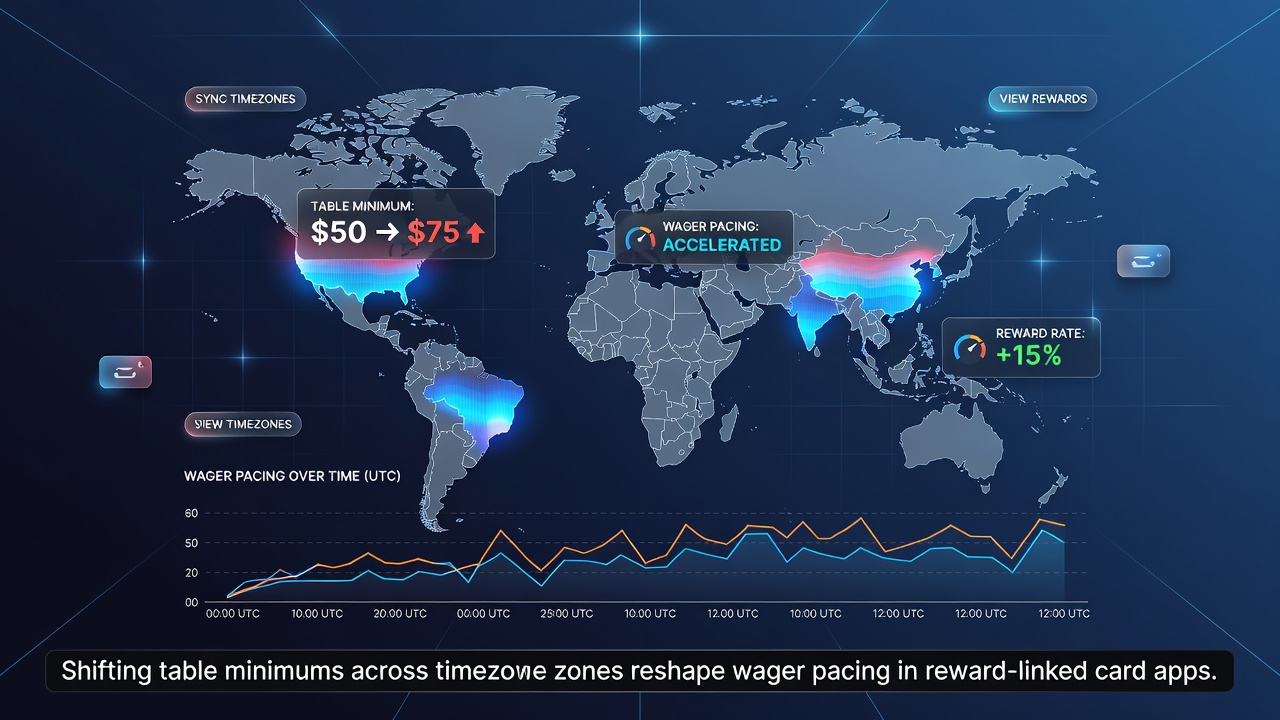
What's notable is how these zone shifts interact with bonus structures that award incremental credits after preset wager milestones. When a minimum jumps mid-session, participants frequently pause to recalculate remaining hands needed to unlock the next tier, leading to clustered betting bursts just before scheduled increases. Data collected across North American and European markets during the first half of 2026 indicates that reward redemption rates rise when minimum changes align with peak user hours, because players accelerate activity to lock in points at the lower rate. Conversely, extended high-minimum stretches correlate with shorter overall session lengths as users exit rather than sustain elevated stakes.
Regional variations and operator responses
Operators serving multiple continents have introduced zone-specific rule overlays to maintain consistent reward economics despite the minimum fluctuations. According to reports from the European Gaming and Betting Association, several platforms now publish daily minimum schedules tied to Coordinated Universal Time offsets, allowing users to anticipate pacing requirements in advance. In parallel, state-level oversight in jurisdictions such as New Jersey has prompted disclosure requirements that list the exact clock times when floors change, ensuring transparency for reward program participants. Observers note that these disclosures appear most frequently in apps that combine live dealer feeds with automated minimum adjustments, where visual confirmation of table limits helps players synchronize their decision cadence with the active zone.
Take one analysis of app usage patterns released in July 2026 that examined over 2 million sessions across three major card titles. The study found that users who maintained consistent device time settings experienced more predictable wager pacing and higher average reward yields per hour compared with those attempting manual overrides. Researchers attributed the difference to reduced interruptions from verification checks that trigger when clock mismatches are detected. Industry organizations including the Canadian Gaming Association have begun collecting similar datasets to assess whether zone-based minimums produce measurable effects on responsible gaming metrics such as session duration and deposit frequency.
Technical implementation and user adaptation
Behind the scenes, apps rely on geolocation cross-referenced with network time protocol to assign zone categories without depending solely on device settings. This layered approach limits exploitation while still allowing minimums to reflect regional demand curves. Players who study published schedules often plan sessions around anticipated drops, queuing reward-earning activity for windows when floors are lowest relative to their location. Evidence from server metrics shows these planned sessions produce steadier point accumulation curves, whereas spontaneous play across shifting thresholds tends to result in more variable pacing and occasional early exits when minimums rise unexpectedly.
Conclusion
Shifting table minimums across timezone zones continue to recalibrate how participants manage wager pacing inside reward-linked card apps, with operators refining detection methods and disclosure practices to align player behavior with system capacity. Continued monitoring through late 2026 will clarify whether these adjustments stabilize reward distribution or introduce new patterns of session fragmentation as users adapt to the zone-driven rhythm.