Regional Banking Policies Reshape Strategy Choices in No-Deposit Card Game Apps
Sam Hoffmann · Jul 26, 2026

Regional Banking Policies Reshape Strategy Choices in No-Deposit Card Game Apps
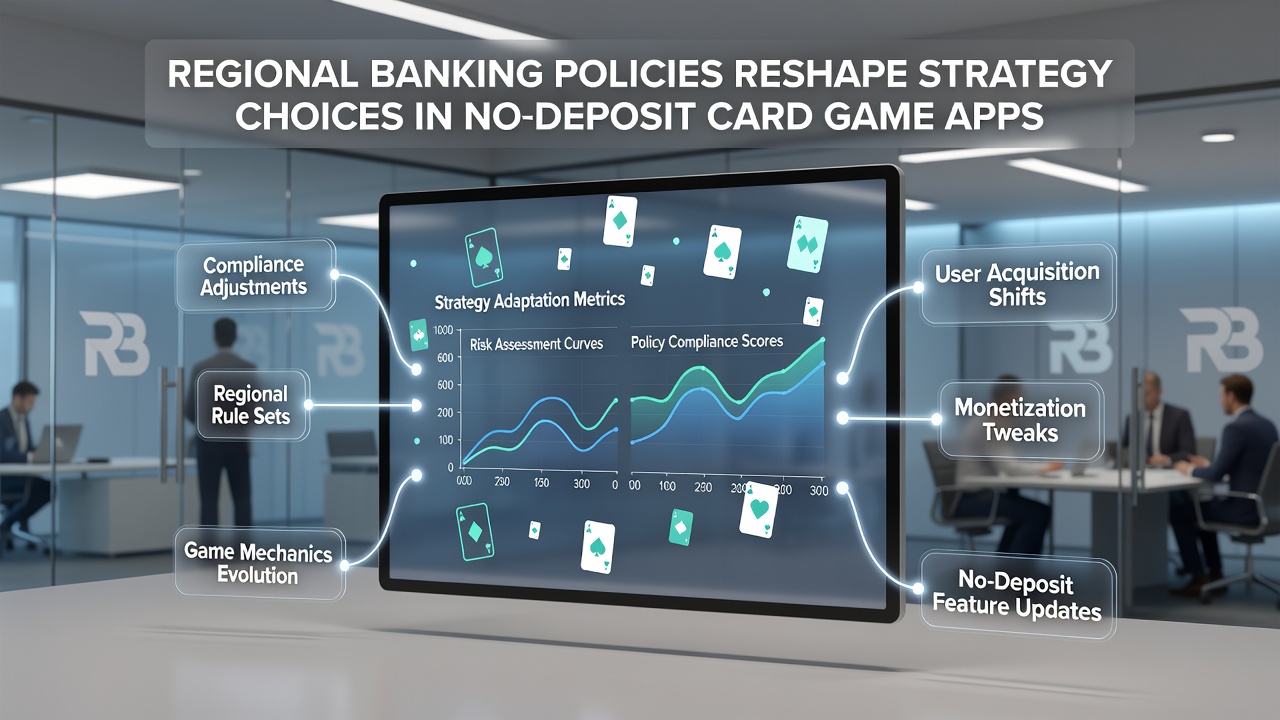
Regional banking policies have started to alter how users approach no-deposit card game apps since early 2025, with new transaction limits and verification rules forcing adjustments in timing, platform selection, and virtual currency management. Data compiled through July 2026 shows measurable shifts in user behavior across North America, Europe, and parts of Asia, where central banks and financial regulators tightened oversight on digital payments tied to gaming platforms.
Policy Variations Across Key Regions
Banking authorities in different jurisdictions apply distinct rules that affect instant transfers and account linkages in no-deposit environments. The Federal Reserve in the United States updated guidance on peer-to-peer payment processors in spring 2026, requiring enhanced monitoring of accounts that frequently interact with gaming services even when no real-money deposits occur. Meanwhile the Bank of Canada introduced monthly transaction caps for certain digital wallets used in free-to-play card simulations, prompting users to spread activity across multiple sessions rather than concentrating plays in single periods.
European Central Bank directives on electronic money institutions further standardized reporting requirements for operators handling virtual rewards, leading some platforms to modify how they process in-app currency exchanges. Observers note that these changes coincide with broader efforts to align anti-money laundering standards without directly targeting no-deposit models.
Impact on User Decision Timelines
Players in affected markets now factor banking windows into their routines. In regions where daily transfer limits apply, many users delay certain actions until the start of a new calendar period or switch to platforms that support alternative settlement methods such as prepaid instruments. Research from the Bank for International Settlements highlights how these constraints have lengthened average session planning cycles by 18 to 27 percent in monitored samples between January and July 2026.
One pattern emerging in July 2026 data involves users coordinating their card game activity with payroll deposit dates or government benefit schedules to maximize available processing capacity. Apps that previously allowed seamless same-day reward redemptions now display estimated wait times that vary by region, encouraging participants to plan sequences of free spins or hands several days ahead.
Platform Adaptations and Feature Adjustments
Developers have responded by introducing region-specific toggles that let users select slower but more reliable processing routes. Some applications now surface real-time indicators of local banking congestion, allowing players to choose between immediate low-value actions and deferred higher-volume ones. Industry reports indicate that adoption of these tools increased steadily through the first half of 2026, particularly among users who maintain multiple regional accounts.
Payment processors themselves have begun offering tiered verification levels, where lighter checks suffice for smaller virtual balances while fuller documentation unlocks larger reward thresholds. This tiering directly influences how frequently users engage with daily login bonuses or tournament entries that carry no upfront deposit requirement.
Cross-Border Considerations
Users who travel or maintain addresses in multiple jurisdictions encounter additional layers of complexity. A player registered in one province or member state may face different daily limits than a counterpart in another, leading some to maintain separate profiles or switch primary devices depending on location. Regulatory filings from July 2026 document a rise in such multi-jurisdiction account management, though operators continue to enforce single-user policies through device fingerprinting and IP monitoring.
Conclusion
Regional banking policies continue to evolve, and their effects on no-deposit card game apps remain visible in user logs and platform metrics through mid-2026. Adjustments in transaction timing, verification depth, and cross-border access now form routine parts of engagement strategies for participants navigating these environments. As regulators refine their approaches, the interplay between financial rules and free-play mechanics is expected to produce further incremental changes in how sessions are structured and rewards are collected.