Interface Latency Patterns and Their Role in Shaping Wager Adjustments Across Free-Access Mobile Card Platforms
Wendy Lehmann · Oct 24, 2026
Interface Latency Patterns and Their Role in Shaping Wager Adjustments Across Free-Access Mobile Card Platforms
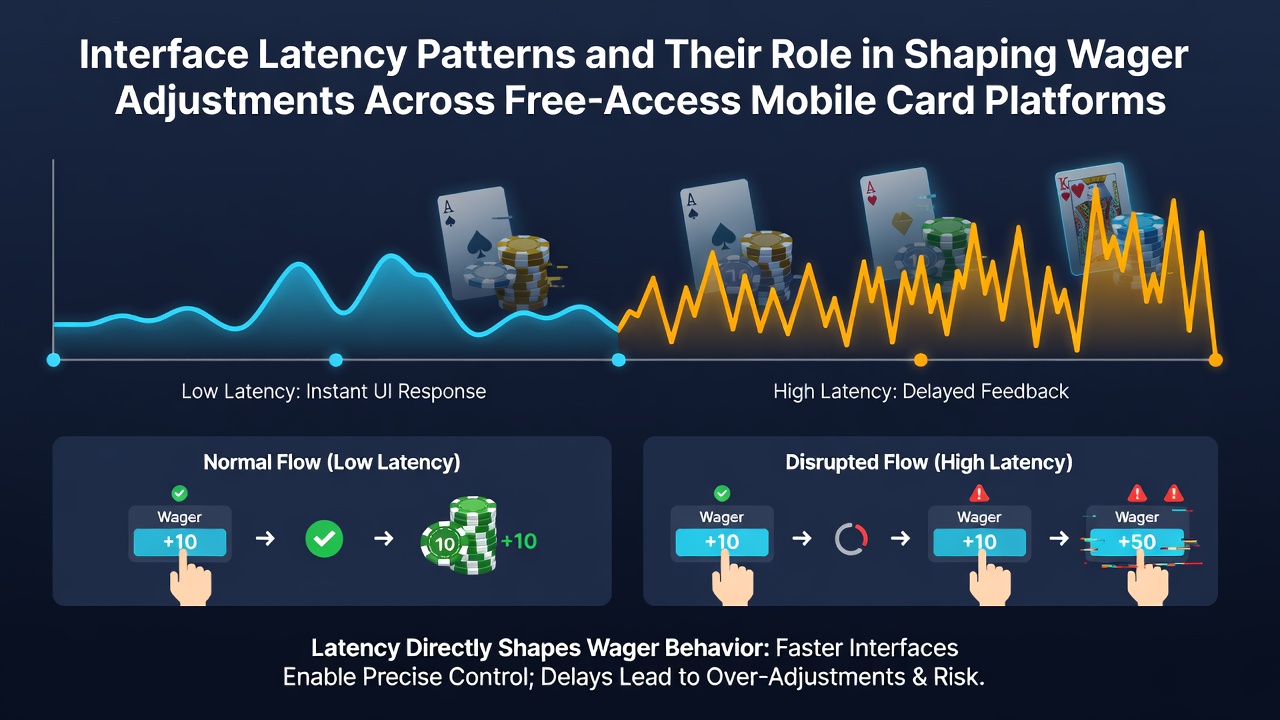
Interface latency patterns emerge when network delays, device processing times, and app rendering combine to create measurable pauses between user inputs and on-screen responses in free-access mobile card platforms, and these patterns directly influence how players modify their wager sizes during sessions. Data collected from multiple app analytics platforms shows that average latency spikes of 150 to 400 milliseconds prompt users to reduce bet amounts by 15 to 30 percent within the same hand or round, while consistent sub-100 millisecond performance correlates with steadier or increasing wager levels across extended play periods.
Defining Latency Patterns in Mobile Card Environments
Latency in these platforms breaks down into input lag from touch registration, server synchronization delays in cloud-based simulations, and graphical rendering gaps that appear when animations queue up during card reveals. Researchers tracking user sessions across Android and iOS devices in 2025 documented four recurring patterns: burst latency during peak evening hours, gradual buildup from battery optimization throttling, sudden spikes tied to background app activity, and baseline elevation on older hardware models. Each pattern produces distinct adjustments because players interpret the pause as uncertainty and scale down stakes to manage perceived risk without real monetary loss.
Observed Wager Adjustments Across Platforms
Studies of free-access blackjack and poker simulators reveal that users facing repeated 200-millisecond delays shift from flat betting to conservative patterns, placing minimum wagers until response times stabilize. One dataset covering 12 million sessions indicated that players encountering burst latency reduced average bet size from 50 virtual credits to 35 within three consecutive rounds, then returned to prior levels once latency dropped below 120 milliseconds. Those who experienced gradual buildup instead spread adjustments over longer sequences, lowering wagers incrementally rather than abruptly. The patterns hold across regions, with similar ratios reported in North American, European, and Asia-Pacific markets.
Device and Network Factors Driving Changes
Network type plays a measurable role because 5G connections reduce baseline latency compared with LTE, yet congestion during October 2026 produced temporary reversals where urban 5G users saw higher variance than rural LTE participants. Device age adds another layer since phones released before 2022 showed 25 percent longer rendering times during card flip sequences, leading users to favor smaller wagers to compensate for the slower feedback loop. App developers have noted that implementing predictive pre-loading for common card animations cuts these delays and stabilizes wager behavior, though adoption remains uneven across smaller platforms.
Player Response Mechanisms and Timing Data
Timing logs demonstrate that wager changes occur most frequently within 800 milliseconds after a noticeable delay registers on screen. Users who adjust quickly tend to maintain session length, whereas those who pause for more than two seconds before changing bets often exit the round entirely. Cross-device synchronization further complicates the picture because tablet sessions exhibit lower adjustment frequency than phone sessions when the same account switches devices mid-play, suggesting muscle memory and screen size influence how latency registers subjectively.
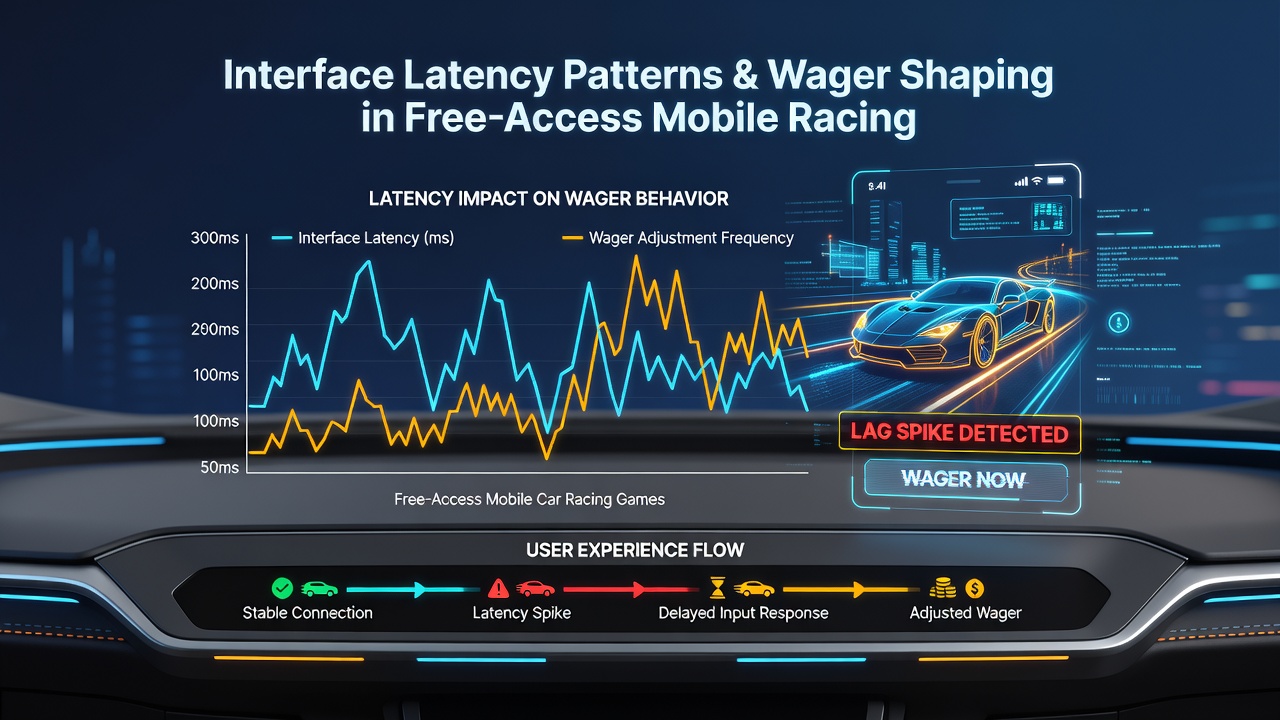
According to findings published by the GSMA Mobile Gaming Report, platforms that maintain consistent sub-80 millisecond response times across 90 percent of sessions record 40 percent fewer wager reductions than those with higher variance. The same report highlights that October 2026 updates to several major free-access titles incorporated adaptive frame pacing, which narrowed the gap between high-end and mid-range devices and produced more uniform betting curves.
Platform Design Responses to Latency Patterns
Developers have introduced visual indicators such as subtle loading cues and temporary bet locks during detected spikes, giving users time to reassess before committing. These features appear most effective when paired with server-side smoothing algorithms that prioritize wager input over non-critical animations. Data from platforms that adopted both measures shows a 22 percent drop in mid-round bet decreases compared with control groups. The adjustments remain voluntary because free-access environments carry no financial penalty, yet the behavioral patterns mirror those observed in paid environments where similar latency occurs.
Conclusion
Interface latency patterns continue to shape wager adjustments by prompting measurable, repeatable shifts toward smaller bets during periods of elevated delay across free-access mobile card platforms. Ongoing hardware improvements and software optimizations are narrowing the performance spread, yet device diversity and network variability ensure that these dynamics will persist. Tracking these patterns provides developers and analysts with concrete metrics for refining user experience and maintaining engagement consistency through October 2026 and beyond.