Interface Designs Guiding Newcomers Through Core Mechanics in Browser-Based Card Variants
Mia Werner · Jul 19, 2026
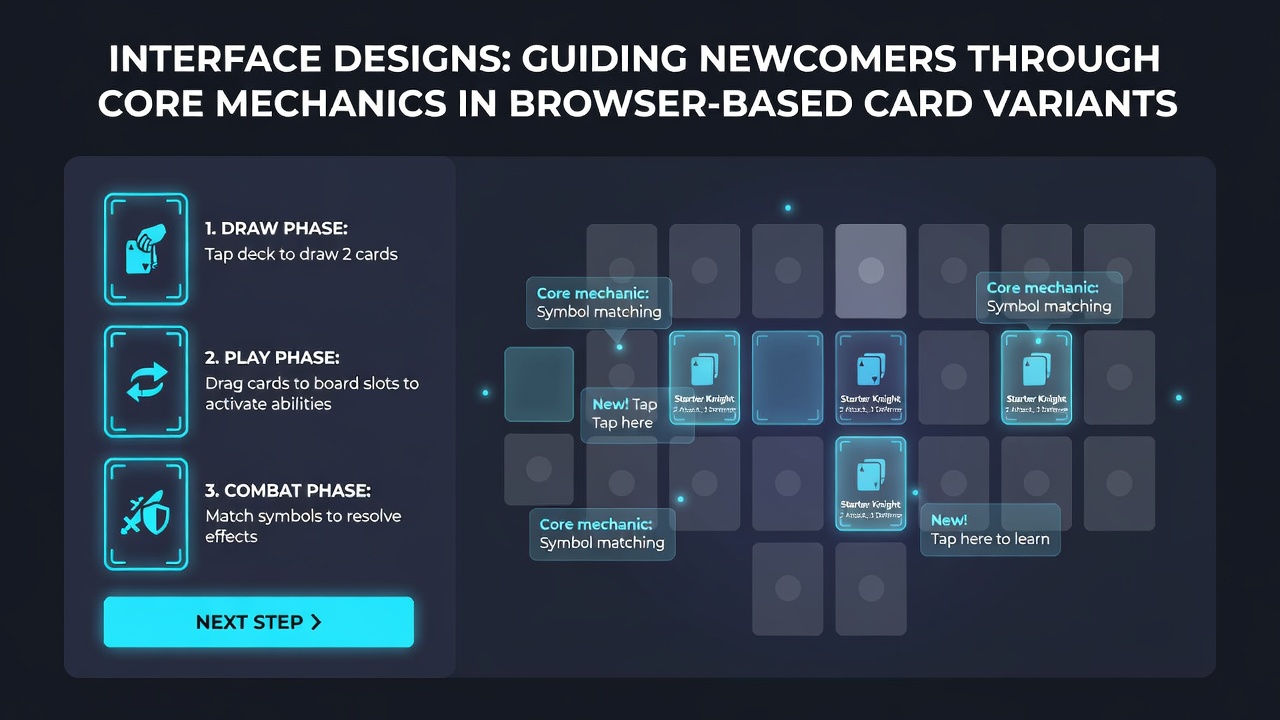
Interface Designs Guiding Newcomers Through Core Mechanics in Browser-Based Card Variants
Browser-based card variants deliver core mechanics to new participants through layered interface elements that appear in sequence rather than all at once, and these systems rely on HTML5 canvas rendering combined with CSS transitions to maintain smooth interactions across devices. Developers implement drag-and-drop handlers that highlight valid drop zones in real time while graying out illegal targets, which reduces initial errors and lets users discover rules through direct manipulation instead of separate instruction pages.
Tutorial Structures Embedded in Game Flow
Many platforms integrate contextual tutorials that activate on first launch and pause after each core action until the player completes the prompted step, and this approach appears in variants of solitaire and rummy-style games hosted on major web portals. Data collected by the Interactive Games and Media program at Rochester Institute of Technology indicates that completion rates for first sessions rise when tooltips display rule summaries only after a player hovers over a card pile for more than two seconds. Such timing prevents information overload while still reinforcing the sequence of draws, discards, and foundation builds.
Progress bars track how many introductory levels a newcomer has finished, yet they remain optional so experienced users can bypass them entirely and jump straight into full decks. Observers note that these bars update dynamically based on interaction logs rather than fixed timers, which accommodates different learning speeds across age groups and connection qualities.
Visual Feedback Mechanisms
Color-coded borders and subtle particle effects signal successful moves versus blocked attempts, and these cues operate without sound so they function in silent browsing environments. When a player attempts an invalid sequence, the interface briefly shakes the selected card and returns it to origin while displaying a concise text label that explains the violated rule in one sentence. Researchers tracking retention across thousands of sessions found that repeated exposure to these instant corrections correlates with faster mastery of variant-specific scoring systems within five to seven plays.
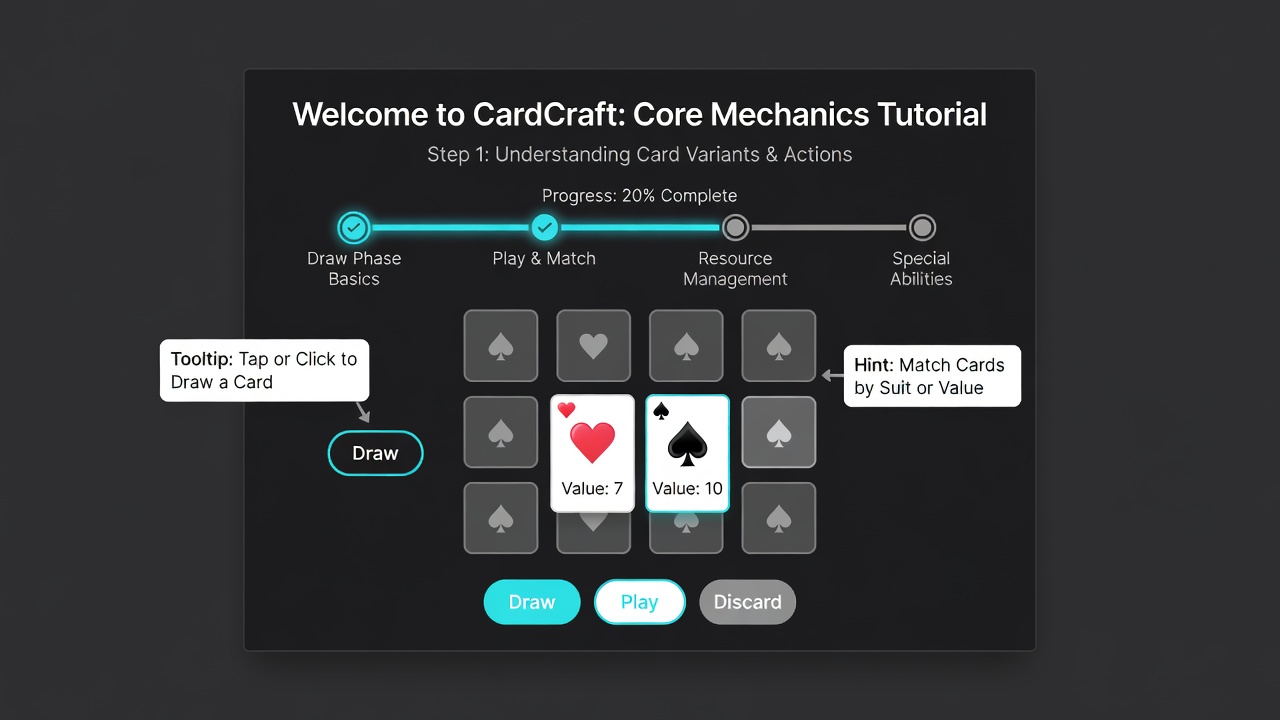
July 2026 updates to web animation standards enabled smoother 60-frames-per-second card flips and stack rearrangements, which further clarified spatial relationships between piles. Developers adopted these capabilities quickly because they require no additional plug-ins and run consistently in current versions of major browsers on desktop and mobile alike.
Accessibility and Adaptive Layouts
Screen-reader compatible ARIA labels describe each card’s rank and suit plus its current legal status, while high-contrast modes adjust iconography without altering core layout logic. Canadian studies on digital media accessibility compiled by the CRTC show increased session lengths among users with visual impairments when interfaces offer scalable text alongside persistent keyboard shortcuts for all primary actions. Adaptive layouts automatically rearrange card stacks on smaller viewports so that foundation areas remain visible without scrolling, preserving the same decision pathways available on larger screens.
Keyboard navigation follows a tab order that mirrors the visual hierarchy of piles, and focus indicators remain visible at all times. This design choice supports players who prefer controller input or who encounter touch-screen latency on certain devices.
Data Patterns Across Platforms
Analytics dashboards reveal that newcomers who encounter guided first moves within the opening thirty seconds show higher rates of returning the following day compared with those who receive no immediate direction. European Commission reports on digital game interfaces document similar patterns across multiple card-variant titles, noting that progressive disclosure of advanced scoring multipliers occurs only after basic placement rules have been demonstrated through repeated successful actions.
Design teams monitor heat maps of cursor movements to identify areas where new participants hesitate longest, then insert additional micro-animations or inline hints at those coordinates. The resulting refinements appear in subsequent patches without requiring full redesigns of the underlying game engine.
Conclusion
Interface patterns that combine contextual prompts, immediate visual corrections, and adaptive accessibility features continue to shape how browser-based card variants introduce their mechanics to expanding audiences. These systems evolve alongside browser capabilities and accessibility standards, maintaining consistent learning curves regardless of device or prior experience level.