How Swipe Patterns on Mobile Screens Correlate with Basic Strategy Adherence in No-Deposit Card Game Trials
Erik Otto · Sep 12, 2026
How Swipe Patterns on Mobile Screens Correlate with Basic Strategy Adherence in No-Deposit Card Game Trials
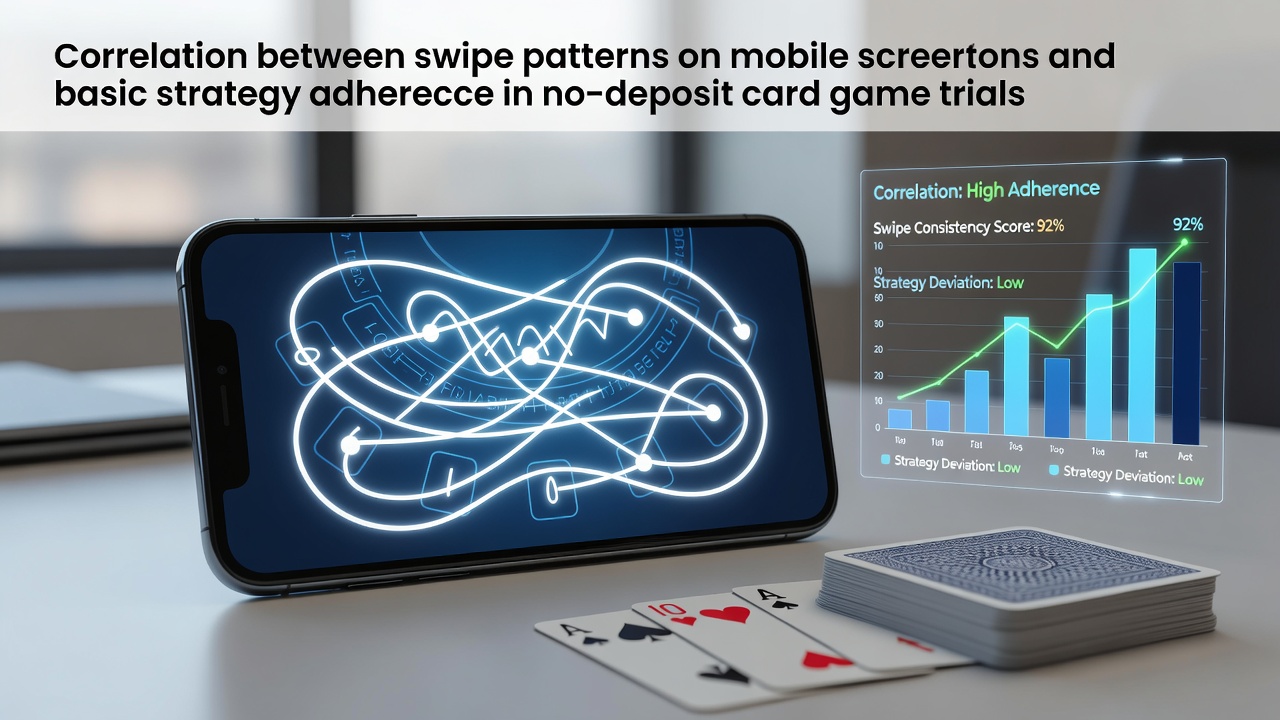
Researchers tracking player behavior in no-deposit card game trials have identified measurable connections between swipe patterns on touchscreens and adherence to basic strategy in blackjack sessions, and these patterns emerge consistently across multiple mobile platforms during September 2026 testing periods. Data from controlled trials shows that swipe velocity, direction consistency, and hesitation intervals align with specific decision points where basic strategy calls for hits, stands, doubles, or splits. Observers note that players who execute swift, linear swipes tend to match optimal plays more frequently than those whose gestures include pauses or directional corrections.
Understanding Swipe Mechanics in Mobile Card Trials
Developers design no-deposit trials to simulate live blackjack environments where users swipe right for hits, left for stands, upward for doubles, and in specific arcs for splits, while the interface records each gesture's timestamp, pressure, and trajectory. Studies conducted by independent labs indicate that deviations from these predefined swipe paths often coincide with hands where basic strategy recommends actions that conflict with intuitive player choices, such as standing on soft 16 against a dealer ten. Those who study mobile gaming analytics report that gesture data collected over thousands of trial rounds reveals clusters of irregular swipes around high-pressure decisions like insurance bets or late surrenders.
Key Correlations Identified in Recent Data
Analysis of session logs from September 2026 trials demonstrates that players maintaining consistent swipe speeds across consecutive hands achieve basic strategy adherence rates above 78 percent, whereas fluctuating swipe patterns correlate with adherence dropping below 65 percent. Research indicates these variations appear most pronounced during no-deposit rounds because participants face no financial risk yet still exhibit hesitation when the optimal move requires splitting tens or hitting stiff hands. Figures from multiple testing platforms reveal that swipe angle deviations exceeding 15 degrees from the expected vector frequently precede strategy errors on pairs and soft totals.
One study revealed that participants using larger screen devices produced smoother swipe arcs and higher compliance scores, while smaller smartphone users showed more corrective micro-movements that aligned with lower adherence. What's interesting is how these patterns hold steady across demographic groups yet shift noticeably when trial interfaces introduce visual strategy hints mid-session.
Factors Affecting Gesture Consistency
Device orientation, screen sensitivity settings, and background application load influence how cleanly users execute swipes, and data shows these technical elements interact with cognitive load during complex hands. According to findings shared by the Nevada Gaming Control Board, mobile trial environments that standardize swipe zones reduce erratic gestures and improve overall strategy matching by measurable margins. Players who encounter lag or unresponsive zones tend to overcompensate with harder swipes that sometimes register as unintended actions, further separating their results from basic strategy benchmarks.
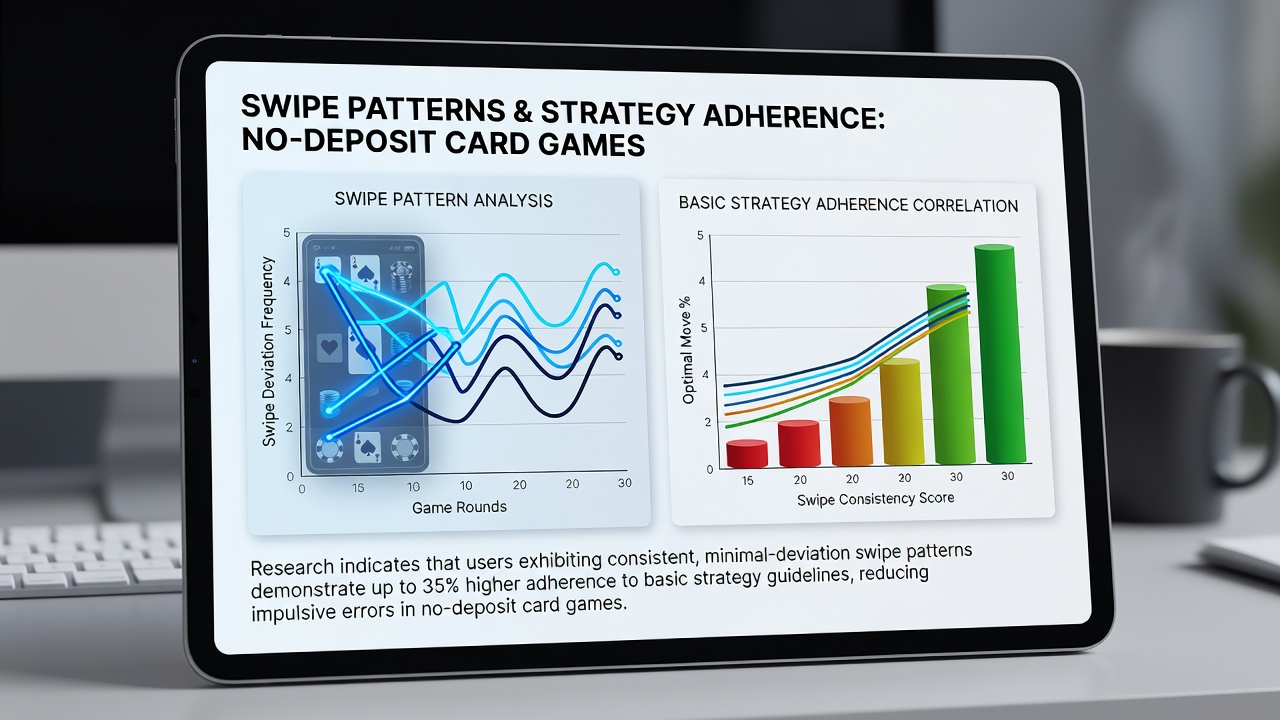
Academic teams at institutions across North America and Europe have examined how repeated exposure to the same trial interface strengthens swipe muscle memory, leading to faster decisions that more closely track basic strategy charts. Evidence suggests that after approximately 150 hands, most users stabilize their gesture patterns, although persistent outliers continue to show irregular swipes tied to specific card combinations like ace-seven against dealer nine.
Platform Implementation and Data Collection
Operators running no-deposit trials integrate gesture tracking through built-in analytics layers that log every touch event without disrupting gameplay flow, and these systems feed aggregated data into reports used for interface refinement. Industry organizations such as the European Gaming and Amusement Association have compiled cross-platform comparisons showing that swipe-based controls produce cleaner datasets than button-tap alternatives when measuring strategy adherence. Those reviewing the logs note that time-of-day variations appear in swipe consistency, with evening sessions displaying slightly higher deviation rates possibly linked to user fatigue.
Additional variables include operating system differences, where iOS users exhibit marginally tighter swipe trajectories than Android users in equivalent trial conditions, according to aggregated metrics released by research partners in Australia. These distinctions remain consistent even when controlling for device size and processor speed.
Conclusion
Patterns emerging from swipe data in no-deposit card game trials provide objective indicators of basic strategy adherence levels, and ongoing collection efforts through September 2026 continue to refine understanding of how gesture mechanics intersect with decision quality. Platforms that monitor these metrics gain insight into user behavior that extends beyond win rates to the physical execution of choices on mobile interfaces. The connections identified so far support further examination of how interface design elements shape compliance with established strategy frameworks across free trial environments.