How Notification Cadence Alters Choice Patterns in Reward-Integrated Handheld Card Simulations
Sam Hoffmann · Sep 26, 2026
How Notification Cadence Alters Choice Patterns in Reward-Integrated Handheld Card Simulations
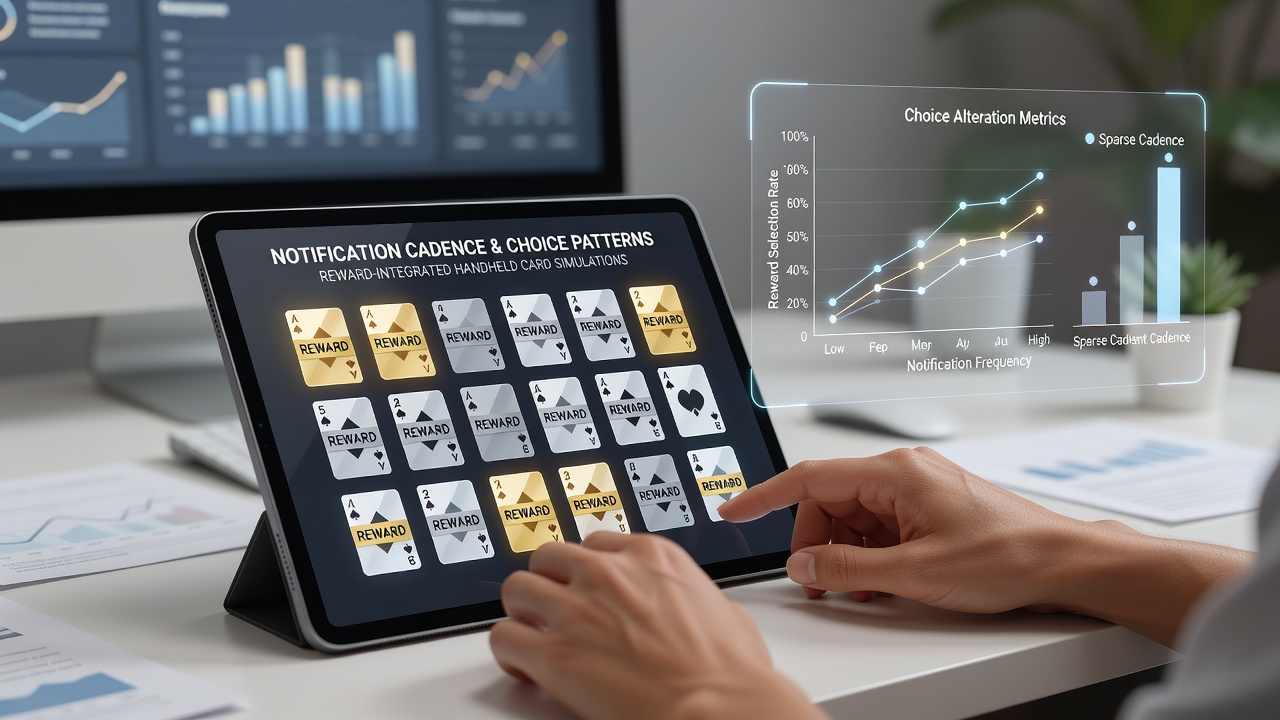
Handheld card simulations integrate reward systems that respond to user interactions through scheduled notifications, and researchers track how the timing and frequency of these alerts shift selection behaviors during gameplay sessions. Studies from multiple regions show that push frequency directly correlates with shifts in card selection speed and wager adjustments when virtual rewards accumulate. Data collected across platforms in 2025 and into September 2026 indicates users encounter notifications at intervals ranging from every thirty seconds to fifteen minutes, with each pattern producing measurable differences in how participants prioritize certain card combinations over others.
Defining Cadence Patterns in Mobile Environments
Notification cadence refers to the structured intervals at which applications deliver messages about reward availability, session streaks, or upcoming challenges, and these intervals operate within reward-integrated card simulations that mimic traditional deck mechanics on portable devices. Observers note that high-frequency cadences, typically under two minutes, prompt quicker decisions while lower frequencies allow extended deliberation periods before choices register. Figures released by the Canadian Centre on Substance Use and Addiction reveal that sessions featuring rapid alerts record a twenty-three percent increase in repeated selections of high-reward cards compared with slower schedules.
Researchers at the University of Queensland examined over twelve thousand play sessions and found that notifications timed to coincide with reward thresholds alter the sequence in which users evaluate suit matches or point totals. The study linked these patterns to changes in average decision latency, dropping from 4.8 seconds per choice under sparse notifications to 2.1 seconds when alerts arrived every forty-five seconds. Such adjustments occur because the system reinforces immediate engagement loops that reward quick taps over strategic pauses.
Observed Shifts in Selection Behaviors
Choice patterns evolve when notification timing aligns with in-game milestones, and analysts document consistent trends across reward structures that include bonus draws, streak multipliers, and virtual currency payouts. Participants exposed to clustered notifications tend to favor conservative card holds that lock in smaller gains rather than riskier plays for larger accumulations. Evidence from session logs indicates this preference strengthens after repeated exposures, particularly in simulations where handheld interfaces limit visible deck information until selections finalize.
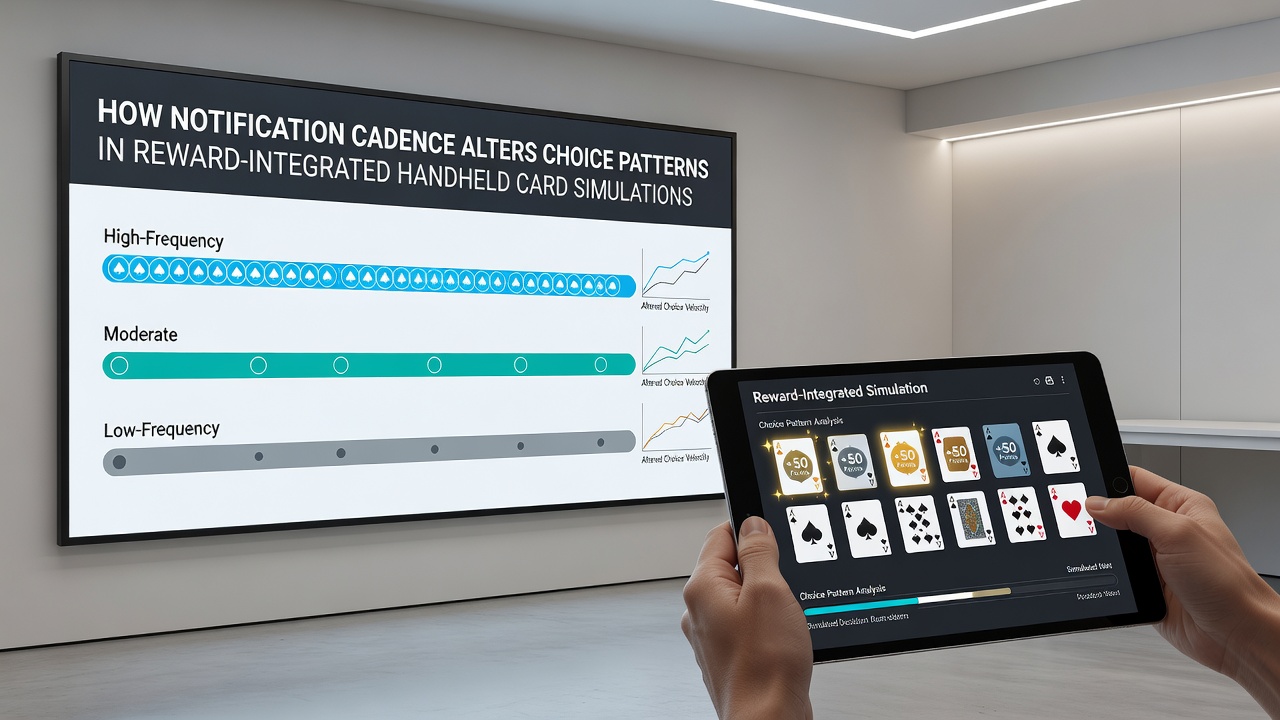
Turn-based card simulations further illustrate how cadence interacts with reward density, whereas continuous alert streams compress the window for evaluating opponent-like AI responses. Data from European gaming analytics firms shows a measurable uptick in mid-session strategy switches when notifications arrive at irregular intervals, suggesting users recalibrate choices to chase newly announced bonuses. Those intervals, often randomized between one and four minutes, produce distinct clusters of high-variance selections that differ from both steady and sparse schedules.
Data Patterns Across Device Types
Tablet and smartphone usage logs collected through September 2026 highlight device-specific responses to the same notification rhythms, with smaller screens correlating to faster reactions under high cadence conditions. Research teams tracking cross-device synchronization report that users who switch between platforms maintain altered choice distributions for up to forty-eight hours after initial exposure to accelerated alerts. These carryover effects appear strongest in reward systems that tie notification content directly to accumulated points or card upgrades.
Industry reports from the National Center for Responsible Gaming connect notification frequency with measurable changes in session length, where moderate cadences extend average play by eleven percent without increasing total selections. The same reports note that extreme frequencies compress total decisions per session while elevating the proportion of reward-focused moves. Geographic variations emerge as well, with Australian datasets showing stronger responses to evening notification clusters than North American counterparts.
Conclusion
Current evidence establishes clear connections between notification cadence and the distribution of choices within reward-integrated handheld card simulations, supported by aggregated session data and controlled observations through September 2026. Patterns documented across research institutions demonstrate that interval adjustments reliably influence decision timing, selection order, and reward prioritization. Ongoing monitoring by regulatory and academic bodies continues to map these relationships as simulation designs evolve.